

Becoming an orthodontist requires a long, rigorous, and highly specialized educational path. This profession involves far more than simply applying braces or aligning teeth. Orthodontists diagnose, prevent, and treat dental and facial irregularities—tasks that demand advanced training, precision, and a deep understanding of craniofacial development. Below is a comprehensive look at the qualifications, education, training, and certifications required to enter this respected specialty.
1. Earning a Bachelor’s Degree
The journey begins with a bachelor’s degree, typically taking four years. While dental schools do not require a specific major, most prospective students choose science-focused fields such as:
-
Biology
-
Chemistry
-
Biochemistry
-
Human physiology
These majors help students complete the necessary pre-dental prerequisites, such as organic chemistry, physics, and biology. Maintaining a strong GPA is essential, as dental school admissions are competitive. Many students also participate in job shadowing or volunteer in dental clinics to gain early exposure to patient care.
2. Taking the Dental Admission Test (DAT)
Before applying to dental school, students must take the Dental Admission Test (DAT). The exam evaluates:
-
Scientific knowledge
-
Academic ability
-
Perceptual ability
-
Reading comprehension
A high DAT score significantly strengthens an application. Because orthodontic residency programs later require top academic performance, aspiring orthodontists often begin building their competitive profile at this stage.
3. Completing a Doctor of Dental Surgery (DDS) or Doctor of Dental Medicine (DMD) Program
After completing undergraduate requirements and gaining admission to dental school, students spend four more years earning either a DDS or DMD degree. Both degrees are equivalent and provide the training needed to practice general dentistry. Dental school coursework covers:
-
Anatomy
-
Physiology
-
Oral pathology
-
Microbiology
-
Dental materials
-
Radiology
-
Pharmacology
Students also receive extensive clinical training, where they treat patients under supervision. This period helps future orthodontists build foundational dental knowledge and hands-on experience, which they will later refine in their specialty training.
4. Passing National Board Dental Examinations
To legally practice dentistry, graduates must pass a series of exams. In the United States, this includes:
-
National Board Dental Examination (NBDE) Parts I and II or the newer Integrated National Board Dental Examination (INBDE)
-
A regional clinical licensing exam
These assessments ensure that dentists—general or specialized—meet standardized competency requirements. Only after passing these exams can a dentist apply for orthodontic residency.
5. Completing a Specialized Orthodontic Residency
The next step is a highly competitive orthodontic residency program, typically lasting two to three years. Only a small percentage of dental school graduates are accepted. During residency, orthodontists-in-training focus specifically on diagnosing and correcting jaw and tooth alignment issues. Training includes:
-
Growth and development of the craniofacial complex
-
Biomechanics of tooth movement
-
Orthodontic appliances (braces, aligners, expanders)
-
Advanced imaging, including cephalometric and digital scans
-
Treatment planning for complex cases
-
Interdisciplinary care with oral surgeons, pediatric dentists, and periodontists
Residents treat numerous real patients under the supervision of experts. This hands-on training refines their clinical judgment and technical skills. Upon completion, they receive a certificate in orthodontics or a Master of Science in Orthodontics, depending on the program.
6. Obtaining State Licensure
After completing residency, the new specialist must obtain an orthodontic license in the state where they plan to practice. Licensure requirements vary but usually include:
-
Proof of dental degree
-
Proof of orthodontic specialty training
-
Passing clinical or written specialty exams
This step ensures that the orthodontist meets state-specific standards for patient care and safety.
7. Board Certification (Optional but Prestigious)
While not required, many orthodontists pursue board certification through the American Board of Orthodontics (ABO). This rigorous process involves:
-
Written examinations
-
Clinical case submission
-
Oral examinations
Board certification demonstrates a commitment to the highest standards in orthodontic care. Certified orthodontists must also participate in continuing education to maintain their status.
8. Continuing Education and Professional Development
Orthodontic technology evolves rapidly—clear aligners, digital treatment planning, 3D imaging, AI-driven simulations, and more. To stay current, orthodontists participate in ongoing education, workshops, seminars, and conferences. Some also join professional organizations such as:
-
American Association of Orthodontists (AAO)
-
American Dental Association (ADA)
-
World Federation of Orthodontists (WFO)
These organizations provide access to research, professional networks, and the latest industry developments.
Final Thoughts
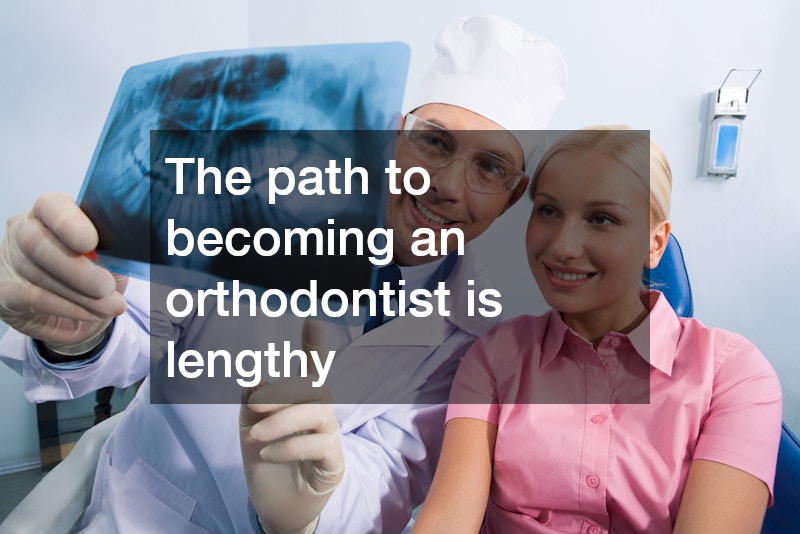
The path to becoming an orthodontist is lengthy—often taking 10 to 12 years of total education and training. But this rigorous preparation ensures that every orthodontist is equipped with the knowledge, precision, and expertise needed to provide safe, effective, and life-changing treatment. From aligning teeth to correcting jaw irregularities, their skills play a crucial role in both oral health and self-confidence.
Related Posts
The Complete Guide to Modern Dental Care From Routine Cleanings to Specialized Surgery
Maintaining a healthy smile is a lifelong journey that involves much more than just brushing and flossing at home. The field of oral healthcare has evolved into a…
Understanding the Different Types of Dentists and What They Treat
The landscape of modern healthcare is constantly shifting, but few fields have seen as much radical transformation as dentistry. What was once a profession focused primarily on extraction…

Is a Cosmetic Dentist Right for You?
Cosmetic dentistry has grown in popularity over the past few decades, becoming a major aspect of regular dental practices. It focuses primarily on improving the appearance of a…

Emergency Dentist When Should You Go See One?
Understanding when to seek immediate dental care can be crucial for your oral health. This article explores the common scenarios where visiting an emergency dentist is advisable. Recognizing…

How A Regular Dental Cleaning Can Benefit Your Health
The Importance of Regular Dental Cleanings for Overall Health Understanding the importance of dental hygiene and its impact on overall health is essential. Many people view dental cleanings…

What Is a Frenectomy and When Is It Needed?
A frenectomy is a minor surgical procedure designed to remove or modify the frenum, a small fold of tissue that connects the lips, cheeks, or tongue to the…
Copyright © All Rights Reserved. Dentist Rock | Sitemap