The landscape of modern healthcare is constantly shifting, but few fields have seen as much radical transformation as dentistry. What was once a profession focused primarily on extraction and pain management has evolved into a sophisticated, multi-disciplinary ecosystem. Today, dentistry is a blend of high-tech engineering, biological science, and artistic craftsmanship. It is a system designed to preserve oral function, prevent systemic disease, restore damaged structures, and enhance the psychological well-being of patients through aesthetic improvement.
Oral health is no longer viewed in isolation from the rest of the body. We now understand the “oral-systemic link”—the profound connection between gum health and chronic conditions like heart disease, diabetes, and even respiratory issues. Inflammation in the mouth allows bacteria to enter the bloodstream, potentially affecting every major organ system. Consequently, choosing the right dental partners is one of the most significant decisions an individual can make for their long-term longevity and quality of life.
The General Dentist: Your Primary Care Advocate
At the heart of this healthcare ecosystem is the dentist. Much like a primary care physician, the general dental practitioner is the first line of defense against disease. They are the “gatekeepers” of your oral health, responsible for the initial diagnosis, treatment planning, and overall coordination of care.
A modern general practice is built on the foundation of the comprehensive oral examination. This process has moved far beyond a simple visual check for cavities. Using digital radiography and intraoral cameras, your provider can detect microscopic fractures, early-stage enamel demineralization, and the subtle signs of oral cancer. These professionals monitor your health at every stage of life, tracking changes in bite alignment, jaw joint (TMJ) function, and the integrity of existing dental work.
The role of the general practitioner also involves acting as a conductor for a larger orchestra of specialists. When a case involves complex root canal morphology, advanced bone loss, or severe malocclusion, the general provider ensures the patient is referred to the correct specialist while maintaining a central record of the patient’s history and goals. They serve as the anchor for your long-term health strategy, ensuring that every intervention—from a simple filling to a complex bridge—contributes to a stable and healthy oral environment.
Pediatric Dentistry: Crafting a Foundation for the Future
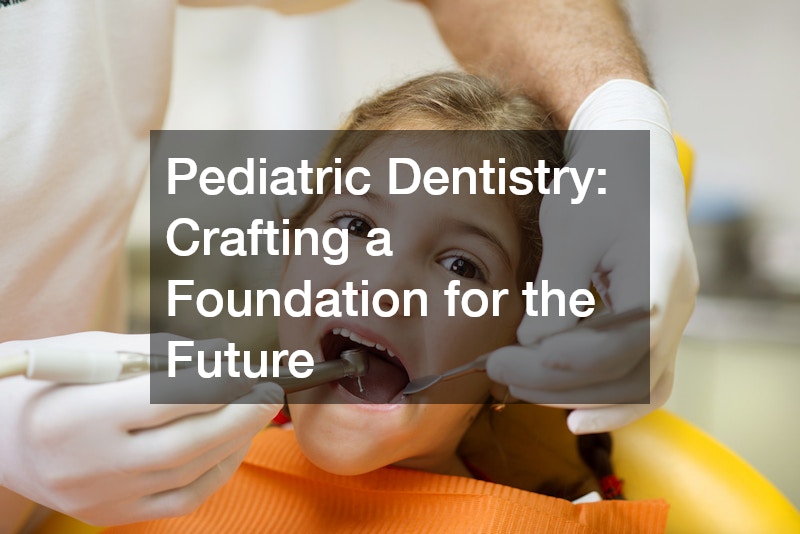
The journey toward a lifetime of healthy smiles begins in infancy. A specialized pediatric dentist is uniquely equipped to handle the physiological and emotional needs of children from birth through adolescence. Children are not merely “small adults”; their primary teeth have thinner enamel, and their mouths are in a constant state of flux as bones grow and permanent teeth develop.
Pediatric specialists focus heavily on “behavior guidance.” Many adults who suffer from dental phobia trace their fears back to a traumatic childhood experience. Pediatric offices are designed to be “non-threatening” environments, often featuring specialized language that explains procedures in a child-friendly way. By creating positive associations with the dentist early on, these specialists prevent the development of lifelong dental anxiety.
Beyond the chairside manner, these providers monitor critical developmental milestones. They look for:
-
Airway Development: Identifying signs of sleep-disordered breathing or tongue-ties that can affect speech, nutrition, and facial growth.
-
Early Orthodontic Indicators: Detecting “crowding” or crossbites before they become major skeletal problems, often allowing for interceptive treatment that simplifies future orthodontic work.
-
Nutritional Habits: Helping parents navigate the “sugar-heavy” world of modern snacks and beverages to prevent Early Childhood Caries (ECC).
Establishing a “dental home” by the age of one ensures that children view oral care as a normal, positive part of their health routine rather than a source of anxiety.
Family Dentistry: Continuity Across Generations
While some prefer specialized pediatric care, many households find immense value in a family dentist. This model of care is built on the concept of the “Dental Home,” where every member of a family—from the toddler to the great-grandparent—receives treatment in the same facility.
The primary advantage of family dentistry is continuity. Because many oral health issues, such as tooth shape, enamel thickness, and even the bacterial makeup of the mouth, can be hereditary, a family provider can track these patterns across generations. If a parent suffers from early-onset periodontal disease, the provider knows to be extra vigilant with the children’s gum health. This genetic insight allows for highly personalized risk assessment and targeted preventive strategies.
Furthermore, family practices simplify the logistics of modern life. They understand the “sandwich generation” struggle, often offering “family block appointments” where multiple family members can be seen simultaneously, reducing the number of trips to the office. This model also eases the transition for adolescents moving into adulthood, as they do not have to “age out” of their childhood practice and find a new provider during an already busy time of life.
Preventive Dentistry: The Philosophy of “Health First”
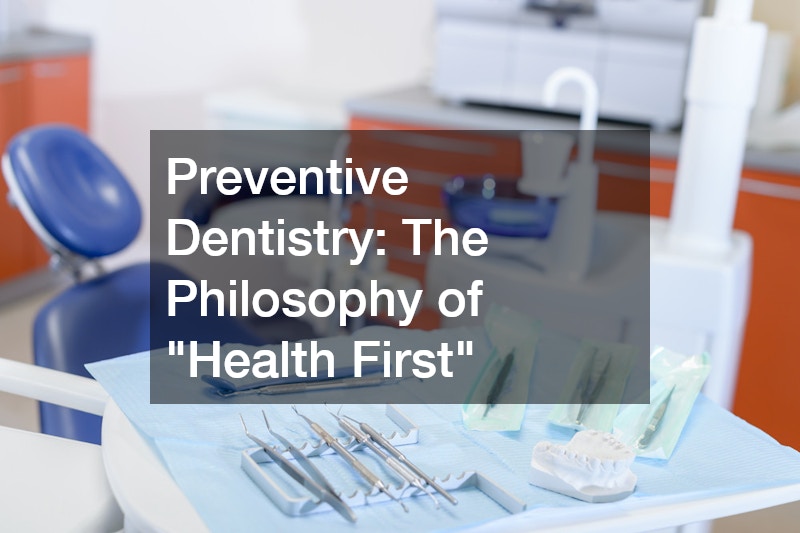
The old adage “an ounce of prevention is worth a pound of cure” is the literal mission statement of preventive dentistry. In the modern era, we have shifted from a “reactive” model—drilling and filling—to a “proactive” model that seeks to stop the disease process before it requires invasive intervention.
Preventive care is a collaborative effort between the clinical team and the patient. In the office, this includes:
-
Professional Prophylaxis: Removing “calculus” (tartar) that cannot be brushed away at home. This is the only way to effectively stop the progression of gingivitis into more serious forms of gum disease.
-
Dental Sealants: Applying thin protective coatings to the deep pits and fissures of molars, acting as a barrier against bacteria in the areas most prone to decay.
-
Fluoride Treatments: Demineralizing weakened areas of enamel to “reverse” early decay before a cavity fully forms.
Equally important is the diagnostic side of prevention. Risk assessment protocols now allow dentists to determine a patient’s risk level based on saliva pH, diet, stress levels, and systemic health. By identifying high-risk patients early, providers can prescribe high-fluoride toothpastes or antibacterial mouth rinses. This stage also includes lifestyle counseling regarding tobacco cessation and hydration.
Cosmetic Dentistry: The Intersection of Art and Science
While health is the priority, the psychological impact of a beautiful smile cannot be overstated. A cosmetic dentist focuses on the aesthetic harmony of the mouth, addressing issues of color, shape, size, and alignment. This field has transitioned from “extreme makeovers” to “micro-aesthetics,” where subtle changes create a natural, rejuvenated appearance.
Modern cosmetic procedures are increasingly conservative. In the past, achieving a perfect smile might have required “crowning” every tooth—a process that involves removing a significant amount of healthy tooth structure. Today, providers use porcelain veneers, composite bonding, and professional whitening to achieve stunning results with minimal alteration to the natural tooth structure.
Cosmetic dentistry is often “functional” as well. Correcting a chipped tooth or closing a gap (diastema) can improve the way a patient speaks and prevent food particles from becoming trapped, which in turn protects the health of the gums and prevents bone loss. Straightening teeth via clear aligners isn’t just about looks; properly aligned teeth are significantly easier to clean, reducing the long-term risk of decay and periodontal disease.
Restorative Dentistry: Reclaiming Form and Function
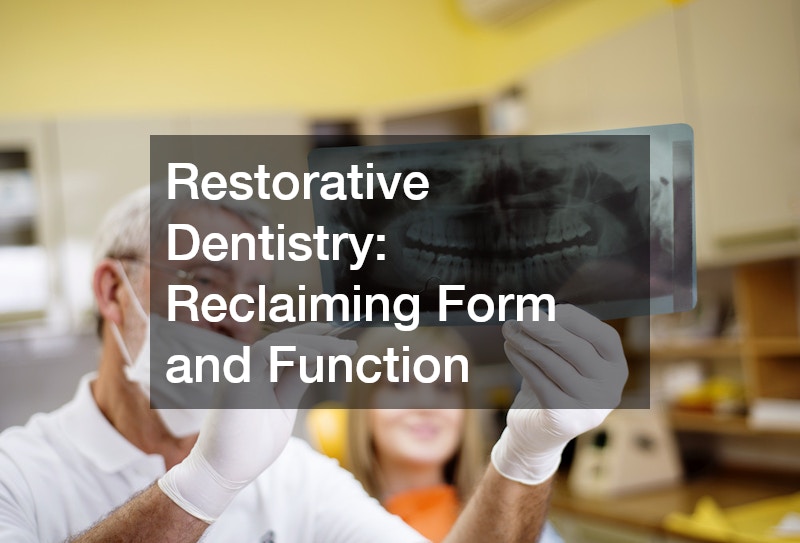
When disease or trauma does occur, restorative dentistry steps in to rebuild what has been lost. The goal of restorative care is to return the mouth to its full chewing capacity, structural integrity, and natural appearance.
The “Golden Age” of restorative materials is currently upon us. We have moved away from silver-mercury amalgams and toward biocompatible ceramics and resins that mimic the light-reflecting properties of natural teeth. Major restorative components include:
-
Crowns: “Caps” that protect a heavily damaged or root-canaled tooth from fracturing under the pressure of chewing.
-
Bridges: Fixed prosthetics that “bridge” the gap created by a missing tooth, anchored by the healthy teeth on either side.
-
Dental Implants: The gold standard of tooth replacement. An implant replaces the root of a tooth with a titanium post, which fuses to the jawbone in a process called osseointegration.
Restorative care is vital because a single missing tooth can trigger a “domino effect.” When a gap is left unfilled, neighboring teeth begin to shift and tilt, and the jawbone begins to resorb (shrink) due to lack of stimulation. Timely restoration prevents these cascading failures and maintains facial volume.
Sedation Dentistry: Breaking the Cycle of Anxiety
For millions of people, the barrier to dental health is not financial or geographical—it is emotional. Dental anxiety prevents a massive portion of the population from seeking even basic cleanings until they are in severe pain. sedation dentistry is the solution that makes modern care accessible to everyone, regardless of their past traumas or fears.
Sedation ranges in intensity to meet the specific needs of the patient:
-
Nitrous Oxide: Known as “laughing gas,” this is a mild sedative inhaled through a nose mask. It induces a feeling of relaxation and wears off quickly, allowing the patient to drive themselves home.
-
Oral Conscious Sedation: A prescribed sedative taken before the appointment. It puts the patient in a “twilight” state where they can still respond to commands but feel no stress and usually have no memory of the procedure.
-
IV Sedation: Administered by a specialist, this provides a deeper level of relaxation for complex surgeries or severe phobias.
Sedation is also a tool for efficiency. It allows a dentist to complete multiple procedures in a single session while the patient remains comfortable. This reduces the number of “anxiety-inducing” trips to the office.
Emergency Dentistry: Urgent Care in a Crisis
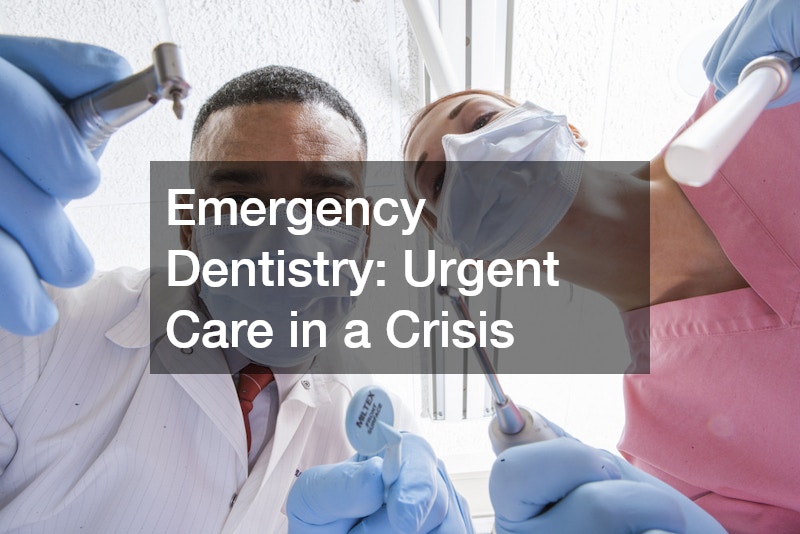
Dental emergencies rarely happen during convenient business hours. Whether it is a tooth knocked out during a sporting event, a sudden abscess causing facial swelling, or a lost crown on a front tooth, an emergency dentist provides the critical intervention needed to save a tooth and prevent the spread of infection.
Time is the most important factor in a dental emergency. For example, a “knocked-out” tooth has a high chance of being saved if it is replanted within 30 to 60 minutes. Emergency providers are trained to handle trauma management, acute pain relief, and immediate infection control. They prevent dental crises from escalating into systemic infections that could require hospitalization. Every patient should know their dentist’s emergency protocol to ensure they aren’t left searching for answers in a moment of pain.
Oral Surgery: The Architecture of the Mouth
Some dental conditions require more than just surface-level treatment; they require oral surgery. This specialty focuses on the hard and soft tissues of the face, mouth, and jaws, bridging the gap between dentistry and medicine.
Oral surgeons undergo years of additional hospital-based residency training. Their expertise is required for:
-
Wisdom Tooth Extraction: Removing third molars that are “impacted” (stuck) under the bone or gum line, which can cause pain, infection, and damage to neighboring teeth.
-
Bone Grafting: When a patient lacks enough natural bone to support a dental implant, the surgeon can “grow” new bone using specialized grafting materials.
-
Corrective Jaw Surgery: Addressing structural skeletal issues that cause severe bite problems, chronic TMJ pain, or obstructive sleep apnea.
Oral surgery is increasingly guided by 3D imaging (CBCT scans), which allow for “virtual surgery” planning. This precision ensures that implants are placed in the ideal position while avoiding vital structures like nerves and sinuses.
Periodontics: Protecting the Foundation
You can have perfectly white, straight teeth, but if the foundation—the gums and bone—is diseased, you will lose those teeth. This is where the periodontist becomes essential. Periodontics is the specialty that treats the supporting structures of the teeth.
Gum disease (periodontitis) is a silent epidemic, affecting nearly half of adults over the age of 30. It often begins as simple gingivitis (red, bleeding gums) but can progress into a chronic infection that destroys the bone. Because it is often painless in the early stages, patients may not realize they are in trouble until their teeth begin to loosen or shift.
Periodontists use a variety of tools to save the foundation, including:
-
Scaling and Root Planing: A “deep cleaning” that removes bacteria and biofilm from far below the gum line where a toothbrush cannot reach.
-
Laser Therapy: Using targeted light energy to kill bacteria and stimulate gum reattachment without the need for traditional scalpels or sutures.
-
Soft Tissue Grafting: Rebuilding gum tissue that has receded due to disease, which protects tooth roots and improves the smile’s appearance.
The Holistic Integration of Specialties
Modern dentistry is no longer a collection of isolated procedures; it is a holistic, life-long journey. The “Lone Ranger” model of dentistry is being replaced by a team-based approach. It begins with the pediatric specialist who builds a child’s confidence and continues with the general and family providers who maintain the “status quo” of health through the decades. When challenges arise—whether they are aesthetic, structural, or foundational—restorative specialists, surgeons, and periodontists provide the advanced care necessary to maintain a complete and functional smile into old age.
Technological advancements such as 3D printing, artificial intelligence (AI) in X-ray diagnostics, and biocompatible materials are making care faster, more accurate, and more comfortable. However, the core of dentistry remains the relationship between the provider and the patient. Informed patients who understand these various specialties are better equipped to advocate for their own health.
By embracing preventive strategies, utilizing restorative advancements, and overcoming fear through sedation, patients can maintain their natural teeth for a lifetime. Your smile is your most valuable social and biological asset. It is the primary way you nourish your body and express your emotions. Investing in its care through these specialized disciplines is an investment in your overall health, your self-esteem, and your daily comfort for decades to come. Modern dentistry doesn’t just fix teeth; it restores lives.