Starting a dental practice from scratch—or rebuilding one that isn’t performing as expected—is one of the most complex professional challenges in healthcare. Clinical skill alone is not enough. Long-term success comes from aligning patient care, operations, environment, and growth strategy into a system that works consistently, even as the practice evolves.
Many practices struggle because decisions are made reactively: adding services without preparation, leasing space that limits growth, or neglecting the patient experience outside the operatory. Others invest heavily upfront without a clear understanding of who they serve or how they will sustain profitability over time.
This guide is designed to help practice owners think holistically. Rather than focusing on shortcuts or quick wins, it breaks down how to build a practice deliberately—step by step—so that each decision supports the next. Whether you are opening your first location or refining an existing one, the goal is to help you create a stable foundation that allows for growth without chaos.
What follows is a practical, experience-driven discussion of patient strategy, service mix, aesthetics, adult care, physical space, and operational discipline. Each section emphasizes actionable steps that can be applied immediately, while keeping long-term scalability in mind.
Defining Your Core Patient Base and Care Philosophy

Before equipment is purchased or walls are painted, the most important decision happens on paper: who the practice is for and what kind of care it is known for. This decision influences nearly every operational and strategic choice that follows. A dentist who tries to serve everyone equally often ends up with diluted messaging, inconsistent workflows, and a team that isn’t sure what the practice truly prioritizes. Patients sense this lack of clarity quickly, even if they can’t articulate it.
Clear focus simplifies marketing because messaging becomes specific instead of generic. It simplifies staffing because hiring decisions are guided by the type of care delivered most often. It simplifies scheduling because appointment lengths, room turnover, and daily flow are designed around predictable needs. It even simplifies treatment planning, since care recommendations are grounded in a consistent philosophy rather than reacting to every possible request.
A strong care philosophy answers three questions, and each one deserves deliberate thought rather than vague answers.
Who is my primary patient?
This isn’t about excluding people—it’s about defining who the practice is optimized for. Age range, family structure, lifestyle, and expectations all matter. A practice built primarily for busy families will look, feel, and operate differently than one focused on retirees or professionals. When this is clear, everything from office hours to communication style becomes more intentional.
What problems am I best equipped to solve?
Every practice has strengths, whether clinical, logistical, or interpersonal. Some excel at preventive care and long-term maintenance, while others shine in complex case coordination. Identifying these strengths allows the practice to lean into them confidently instead of stretching beyond capacity. This clarity also prevents burnout by aligning daily work with real capabilities.
How do I want patients to feel after every visit?
Patient experience is not accidental. Feelings like relief, trust, reassurance, or confidence come from systems, not slogans. Defining the desired emotional outcome helps guide decisions around pacing, explanations, follow-up, and even how setbacks are handled. Consistency here builds loyalty far more effectively than perfection.
For many practices, families form the backbone of long-term stability. Serving children early builds relationships that can last decades, often extending to parents, siblings, and eventually the next generation. In these cases, deciding whether to bring in a pediatric dentist becomes a strategic choice, not just a clinical one. It affects how the practice is perceived, how appointments are structured, and how smoothly the day runs.
A dedicated provider for younger patients can:
- Improve appointment efficiency by reducing extended chair time and rescheduling
- Increase parent confidence through specialized communication and behavior management
- Reduce stress for general providers by allowing them to focus on other types of care
- Encourage multi-generational loyalty by creating positive early experiences
This decision should be evaluated through both operational data and long-term vision, not just immediate demand.
Actionable steps to define your base include practical analysis and firm decision-making:
- Analyze local demographics, not just population size, to understand age distribution, family density, and household trends
- Identify underserved age groups or care gaps that align with your strengths rather than chasing every opportunity
- Decide what you will say no to as intentionally as what you say yes to, protecting focus and quality
- Document your philosophy so staff can communicate it consistently, especially during onboarding and patient interactions
Once this foundation is set, every future decision—from services offered to office design—becomes clearer and easier to justify. Instead of debating each choice in isolation, decisions are measured against a shared vision, saving time, reducing friction, and creating a more cohesive practice overall.
Introducing High-Value Procedures That Drive Revenue
Not all services contribute equally to growth. Adding advanced procedures too early can strain staff and finances, while waiting too long can leave revenue on the table. The key is sequencing.
Procedures like dental implants can significantly increase case value, but they require more than clinical readiness. Successful implementation depends on:
- Adequate case flow
- Proper diagnostic systems
- Clear referral or in-house protocols
- Patient education processes
Similarly, Invisalign is often seen as an “easy add,” but without proper systems, it becomes underutilized. Practices that succeed with it treat it as a program, not a product.
Actionable tips for adding high-value services:
- Start by tracking how often patients ask about the procedure
- Invest in staff training before investing in equipment
- Create internal checklists for candidacy and consultation flow
- Develop educational materials that answer common objections
- Set monthly benchmarks for case acceptance, not just inquiries
When services are introduced with intention, they enhance both patient outcomes and financial stability instead of creating operational stress.
Positioning Your Practice for Aesthetic Dentistry Success

Cosmetic services thrive on trust because patients are choosing improvement, not treatment they feel they “have” to do. Unlike restorative care, elective procedures require emotional buy-in before financial commitment. A cosmetic dentist who focuses only on outcomes—without explaining the reasoning, risks, and alternatives—often encounters hesitation, delayed decisions, or complete case rejection. Patients may like the idea of change, but uncertainty about the process creates friction.
Aesthetic dentistry works best when it is framed as problem-solving rather than selling. Most patients are not asking for perfection; they are looking for relief from a specific concern. Effective consultations slow the conversation down and start with listening, allowing the patient to articulate what they notice, what they dislike, and what they hope will change. From there, the role of the provider becomes educator rather than persuader.
Patients want to understand:
- What bothers them about their smile and why those concerns exist
- What options exist and how those options differ functionally and visually
- What trade-offs come with each option, including time, cost, and permanence
- What the long-term maintenance looks like and how it fits into their lifestyle
When these questions are addressed clearly, resistance tends to drop because patients feel in control of the decision rather than guided toward a single outcome.
Veneers, for example, should never be positioned as the default solution. While they can be transformative, they are also irreversible and require long-term upkeep. When veneers are recommended thoughtfully—after discussing alternatives and explaining why other options may fall short—patients perceive the recommendation as tailored rather than transactional. This approach increases satisfaction because expectations are grounded in understanding, not hype.
Actionable strategies to improve cosmetic case acceptance focus on structure and consistency rather than persuasion:
- Use visual aids and mockups during consultations so patients can see potential changes, not just imagine them
- Document real outcomes, not stock photos, to demonstrate credibility and realistic results
- Offer phased treatment plans when appropriate, allowing patients to move forward at a comfortable pace
- Train staff to reinforce education without pressure, using consistent language that supports informed decisions
- Schedule dedicated consultation time separate from hygiene visits so conversations aren’t rushed or distracted
When patients feel informed rather than rushed, cosmetic dentistry becomes a natural extension of comprehensive care. Decisions feel collaborative, trust deepens, and acceptance improves because patients understand not just what is being recommended, but why it makes sense for them.
Serving Adults Seeking Functional and Lifestyle Improvements
Adults approach dental care differently than children or teens. Time constraints, professional appearance, and financial considerations all influence decision-making. Practices that excel in adult orthodontics adapt both communication style and logistics to meet these needs.
Many adults are interested in improvement but hesitant about disruption. They want to know:
- How treatment fits into their daily routine
- Whether it will affect their work or social life
- What happens if they miss appointments
- How results align with other dental goals
Adult orthodontics often overlaps with restorative or aesthetic care, making coordination essential.
Actionable steps to attract and retain adult patients:
- Offer extended or flexible appointment hours
- Use clear, jargon-free explanations
- Provide realistic timelines with buffer expectations
- Coordinate treatment planning across providers
- Follow up consistently after consultations
When adult patients feel respected and understood, they are more likely to commit—and to refer others like them.
Maintaining a Professional, Patient-Ready Environment
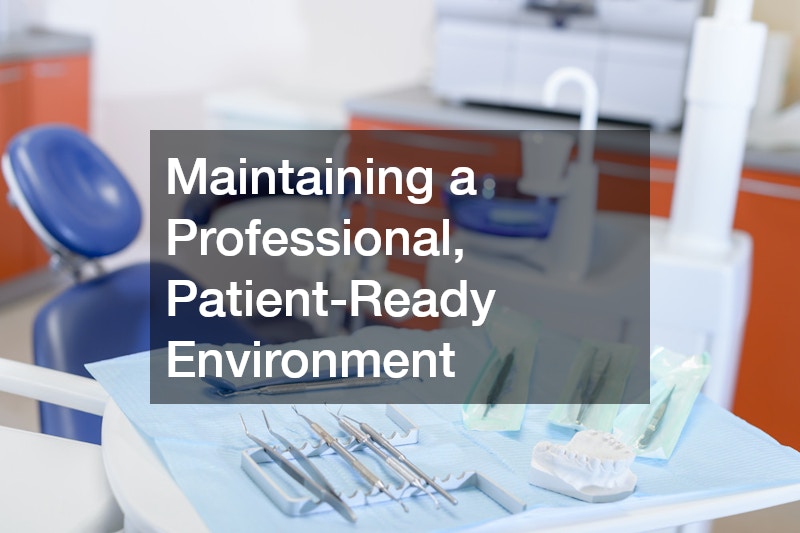
Patients judge a practice long before they meet the provider. Cleanliness, lighting, and overall condition directly influence trust. While clinical sterilization is expected, general upkeep often gets overlooked.
Partnering with a reliable office cleaning company ensures consistency that internal staff may struggle to maintain. Professional cleaners help:
- Reduce cross-contamination risks
- Improve first impressions
- Free staff to focus on patient care
- Maintain compliance with health standards
Beyond cleanliness, visual wear impacts perception. Commercial painting is one of the most cost-effective ways to modernize a space without a full renovation.
Actionable environment management tips:
- Create written cleaning service standards and inspection checklists
- Schedule repainting during low-volume periods
- Choose neutral, calming color palettes
- Address small issues (scuffs, stains) before they accumulate
- Treat maintenance as a brand investment, not an expense
A well-maintained office reassures patients that attention to detail extends to their care as well.
Choosing and Scaling the Right Physical Location
Location decisions have long-term consequences that are difficult to undo because physical space shapes daily operations, patient experience, and growth potential. An office for lease might look ideal based on current patient volume or budget, but if future needs aren’t considered, that same space can quickly become restrictive. Outgrowing a location too soon leads to overcrowded schedules, inefficient workflows, and difficult choices between expansion and relocation—both of which are expensive and disruptive.
Smart location planning balances present affordability with future flexibility. The goal is not to overextend financially, but to ensure the space can adapt as demand increases and services expand. Evaluating a location through a multi-year lens helps avoid decisions that feel manageable now but limiting later.
Important factors to evaluate go beyond square footage alone:
- Square footage for additional operatories should allow growth without sacrificing circulation or privacy
- Storage and sterilization flow must support efficient turnover and compliance as volume increases
- Visibility and signage restrictions affect discoverability and brand recognition, especially in competitive areas
- Parking availability influences patient punctuality and overall convenience
- Accessibility for all age groups ensures comfort and safety for children, adults, and older patients alike
Actionable leasing considerations focus on protecting flexibility and reducing future risk:
- Negotiate expansion or exit clauses early, before leverage is lost, to preserve options as the practice grows
- Map out ideal workflow before signing, using floor plans to test patient movement, staff flow, and bottlenecks
- Avoid overbuilding too early by prioritizing functional design over unused square footage
- Factor in renovation and downtime costs, including permits, construction timelines, and temporary schedule reductions
- Consult professionals who specialize in healthcare spaces to identify hidden limitations and compliance issues
Choosing the right space allows the practice to evolve without disruptive relocations or costly compromises. When growth is anticipated rather than reacted to, the physical environment supports efficiency, consistency, and long-term stability instead of becoming an obstacle.
Building a dental practice from the ground up is not about perfection; it’s about alignment. When patient focus, services, environment, and space planning all support the same long-term vision, growth becomes manageable instead of overwhelming.
Practices that last are built deliberately. They prioritize clarity over speed, systems over shortcuts, and patient experience over trends. By revisiting these foundational elements regularly, practice owners can adapt to change without losing direction.
Success, in the end, is not defined by how fast a practice grows—but by how well it sustains quality, culture, and care over time.